Philosophy of Science
Seven lectures on explanation, laws, causation, realism, evidence, and scientific practice
Course archive · 2023–2024
More compelling questions than simple answers
In this course, we embark on a journey to understand not just what science tells us about the world, but also the deeper questions of how it acquires knowledge and why it matters. We dive into fundamental concepts that scientific inquiry often brings to the fore, examining how philosophical thought has historically informed and been shaped by scientific progress.
From the nature of scientific theories to the very limits of what we can know, the course cultivates an intellectually stimulating environment for open discussion, encouraging students to critically engage with and challenge established ideas. We will succeed together whenever we leave with more compelling questions than simple answers.
Course information
This course introduced central questions about scientific explanation, laws, causation, realism, evidence, and science as a social practice. Seven thematic lectures paired philosophical arguments with examples and counterexamples from physics and the special sciences. The archived slide decks remain available through the lecture images below.
Course structure
The course followed a cumulative sequence: it began by asking why philosophy of science matters, then moved through scientific explanation, laws and causation before turning to realism, induction and evidence, and science as a social endeavour. Lectures used cases and counterexamples to compare philosophical positions and expose assumptions that often remain implicit in scientific practice.
Assessment design
Assessment consisted of two individual short essays. Students selected from course topics and were asked to explain a philosophical position, apply it to an example or compare it with a competing view, develop an objection, and critically evaluate the result. Evaluation emphasized clarity, coherence, structure, precise use of terms, and consistent attribution of sources.
Local archive
Lectures and slide decks
Why do we care?
In this first class, we explore why philosophy of science matters by diving into big questions: what science is, where it came from, and whether it can ever be “done.” We trace its roots in philosophy, look at how thinkers like Descartes, Hume, and Kant shaped our ideas about knowledge, and set the tone for questioning the assumptions behind science itself.
Open lecture slides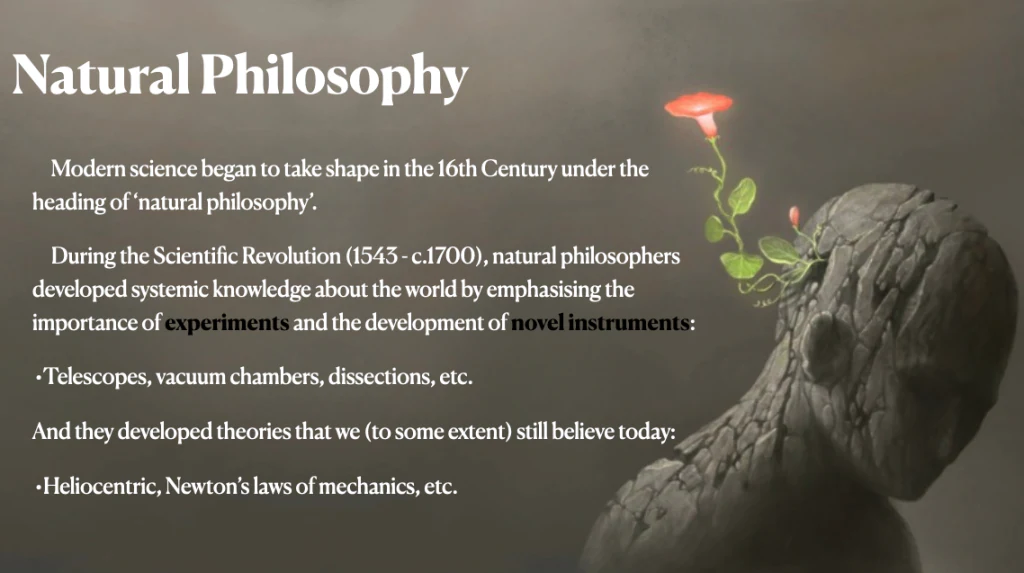 PDF · local
Scientific Explanations
This lecture examines what makes an explanation scientific, focusing first on the logical positivists’ D-N model, which sees explanations as deductions from laws. We explored counterexamples and introduced pragmatic approaches that emphasize context and relevance. The lecture concludes by noting the role of probabilistic reasoning in the special sciences, where explanations are often statistical rather than strictly deductive.
Open lecture slides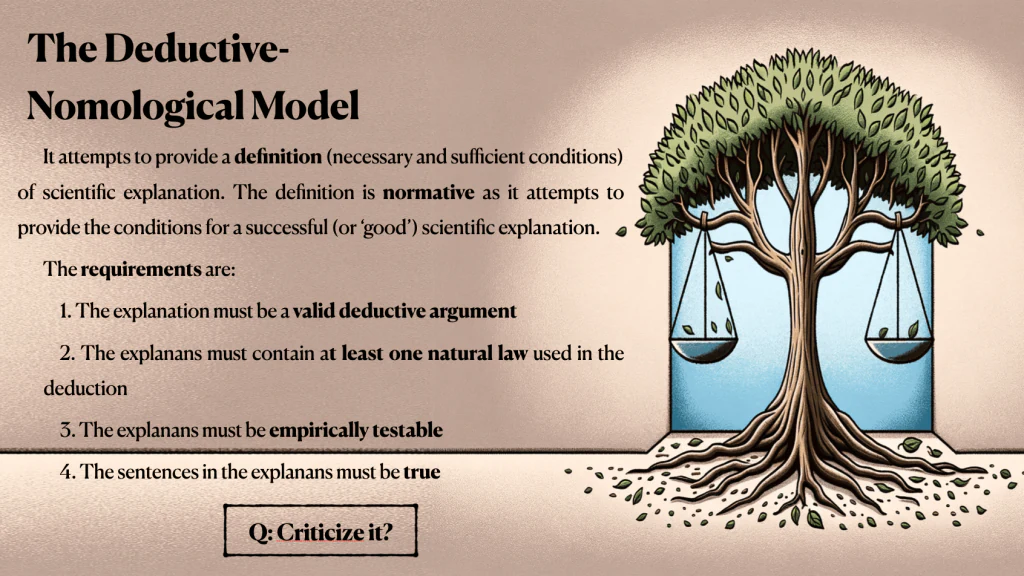 PDF · local
Laws of Nature
This lecture explores what counts as a law of nature and how laws differ from mere regularities. It looks at examples from physics, the role of necessity, especially counterfactual support, and philosophical accounts like the Best-System Analysis and Realism about universals. It questions whether laws reflect objective features of the world or just how scientists treat certain regularities. Alternative views are considered, including denying laws altogether in favor of dispositions or holistic explanations.
Open lecture slides PDF · local
Causation and the Special Sciences
This lecture explores the challenges of scientific explanation in the special sciences, focusing on the limitations of the Deductive-Nomological (D-N) model and the role of causation. It uses examples like climate change and statistical correlations (e.g., smoking and cancer) to show how scientific practice often relies on causal reasoning and interventionist approaches rather than strict laws of nature. The discussion highlights Aristotle’s types of causes, the idea of ceteris paribus clauses, and the pragmatic use of statistical and effective laws. It ends by contrasting laws and causes and introducing unification as an alternative route to scientific understanding.
Open lecture slides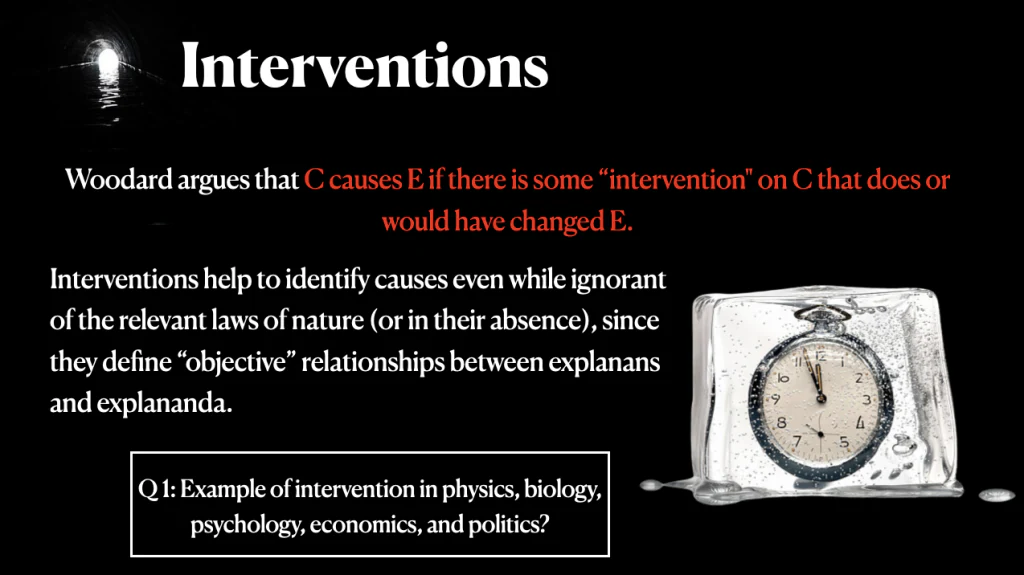 PDF · local
Scientific Realism
This lecture introduces scientific realism through the analogy of a child exploring a tablet screen, gradually uncovering deeper layers of structure. It examines reductionism, the role of unobservable theoretical terms, and the tension between explanation and empiricism. Competing views like instrumentalism and constructive empiricism are discussed, alongside arguments for realism such as the “no miracles” argument and criticisms like the pessimistic meta-induction. The lecture closes by reflecting on how holism, language, and the observable/unobservable divide impact our understanding of scientific knowledge.
Open lecture slides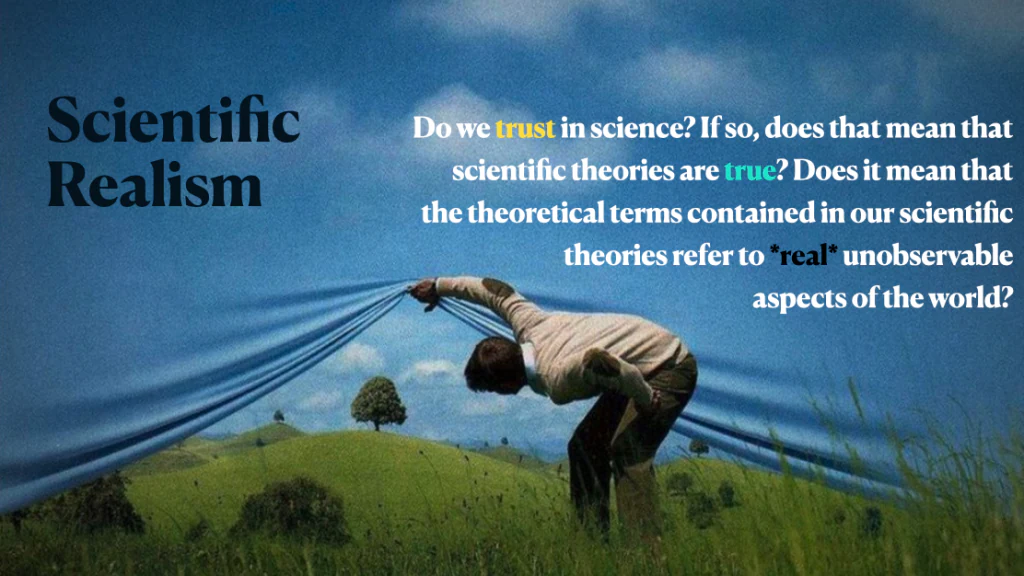 PDF · local
Induction and Evidence
This lecture explores the problem of induction in science, beginning with Hume’s argument that inductive reasoning cannot be logically justified. It examines responses from pragmatists, probabilists, and Bayesians, highlighting the challenges of defining positive evidence and estimating prior probabilities. It then transitions to Popper’s falsificationism as an alternative, noting its own descriptive and prescriptive flaws. Finally, the lecture discusses underdetermination and raises deeper questions about theory choice, consensus, and the role of non-epistemic factors in science.
Open lecture slides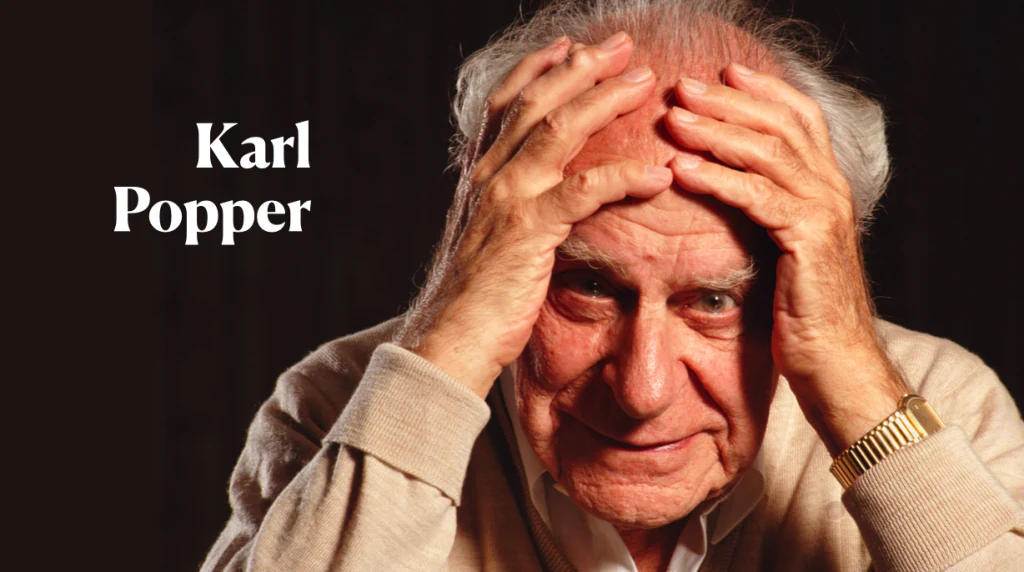 PDF · local
Science as a social endeavour
This lecture explores science as a social activity, challenging the idea that it straightforwardly delivers objective truths. It focuses on Thomas Kuhn’s concept of paradigms and scientific revolutions, where what counts as valid science depends on the dominant worldview shared by a scientific community. Observations and even perception are shaped by these paradigms, making science less about discovering absolute truths and more about shifts in collective understanding. Kuhn’s view is contrasted with Lakatos’ model of research programs, which tries to preserve a notion of rational scientific progress without denying the historical and sociological dimensions that Kuhn emphasized.
Open lecture slides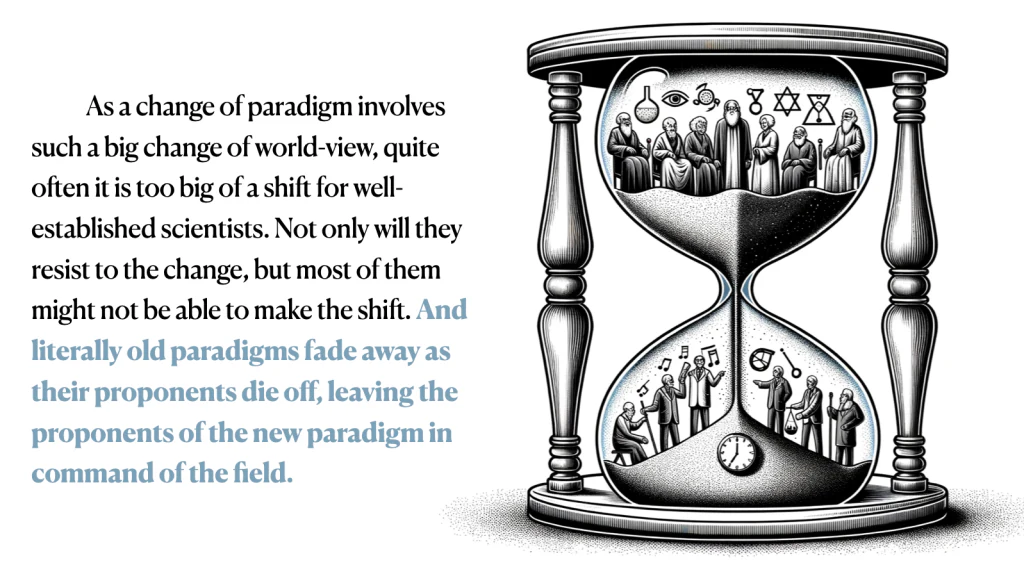 PDF · local